From Bilbao to Rebirth: How Tottenham Hotspur's Darkest Period Could Spark Their Brightest Future
Written by Anthony Rosenberg-Murray
Football clubs are often defined by moments. Some moments create legends. Others expose uncomfortable truths.
For Tottenham Hotspur, the last eighteen months have been a journey through both extremes. There have been unforgettable highs, devastating lows, boardroom drama, managerial upheaval, transfer sagas, relegation fears, and now, perhaps, the first genuine signs of a long awaited rebuild.
What began with dreams of European glory and a return to the elite of English football quickly descended into one of the most turbulent periods in the club's modern history. Yet somehow, after everything that has happened, there is a growing belief that Tottenham Hotspur may finally be moving in the right direction.
The Night That Changed Everything
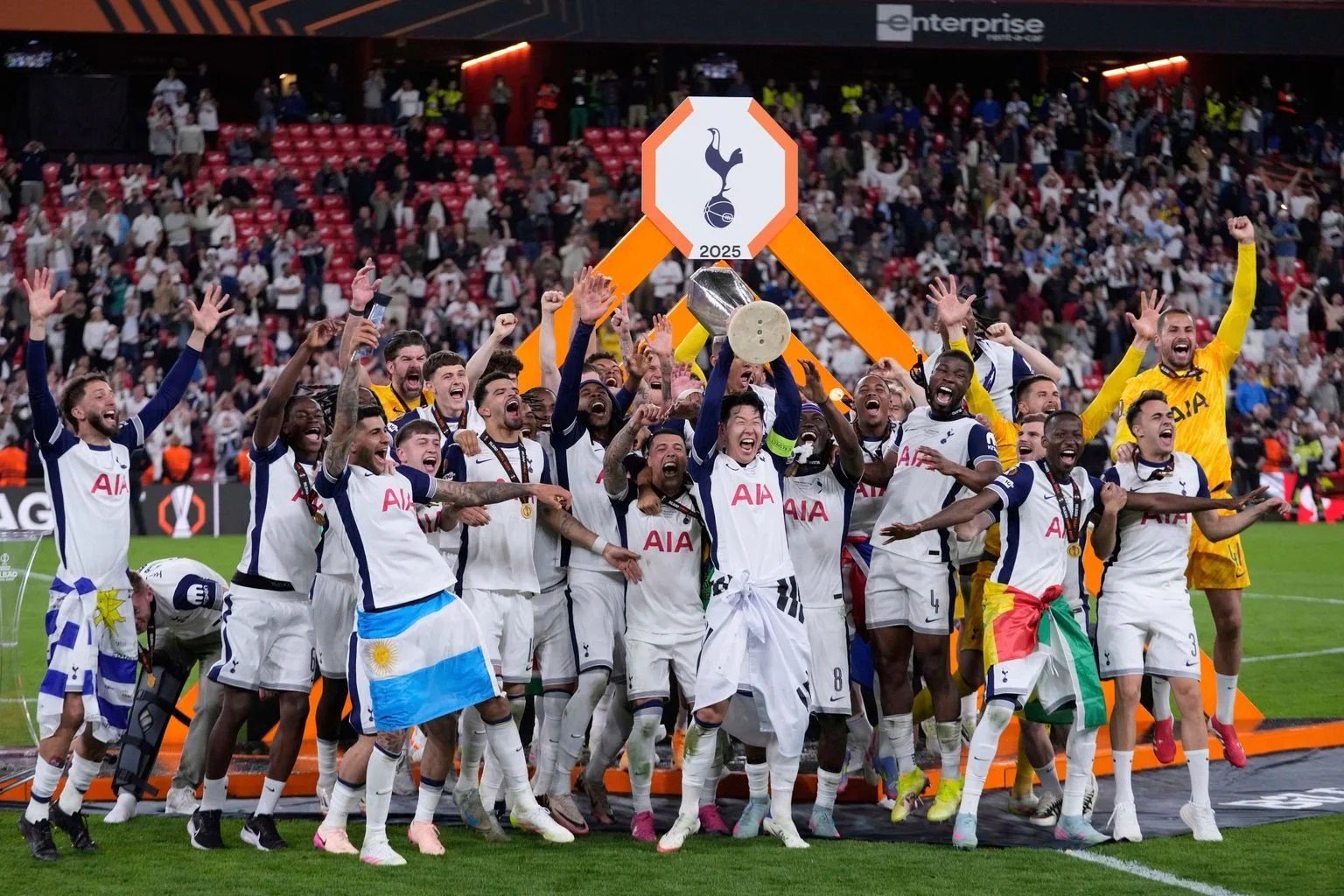
On 21 May 2025, Tottenham Hotspur delivered one of the greatest nights in the club's history.
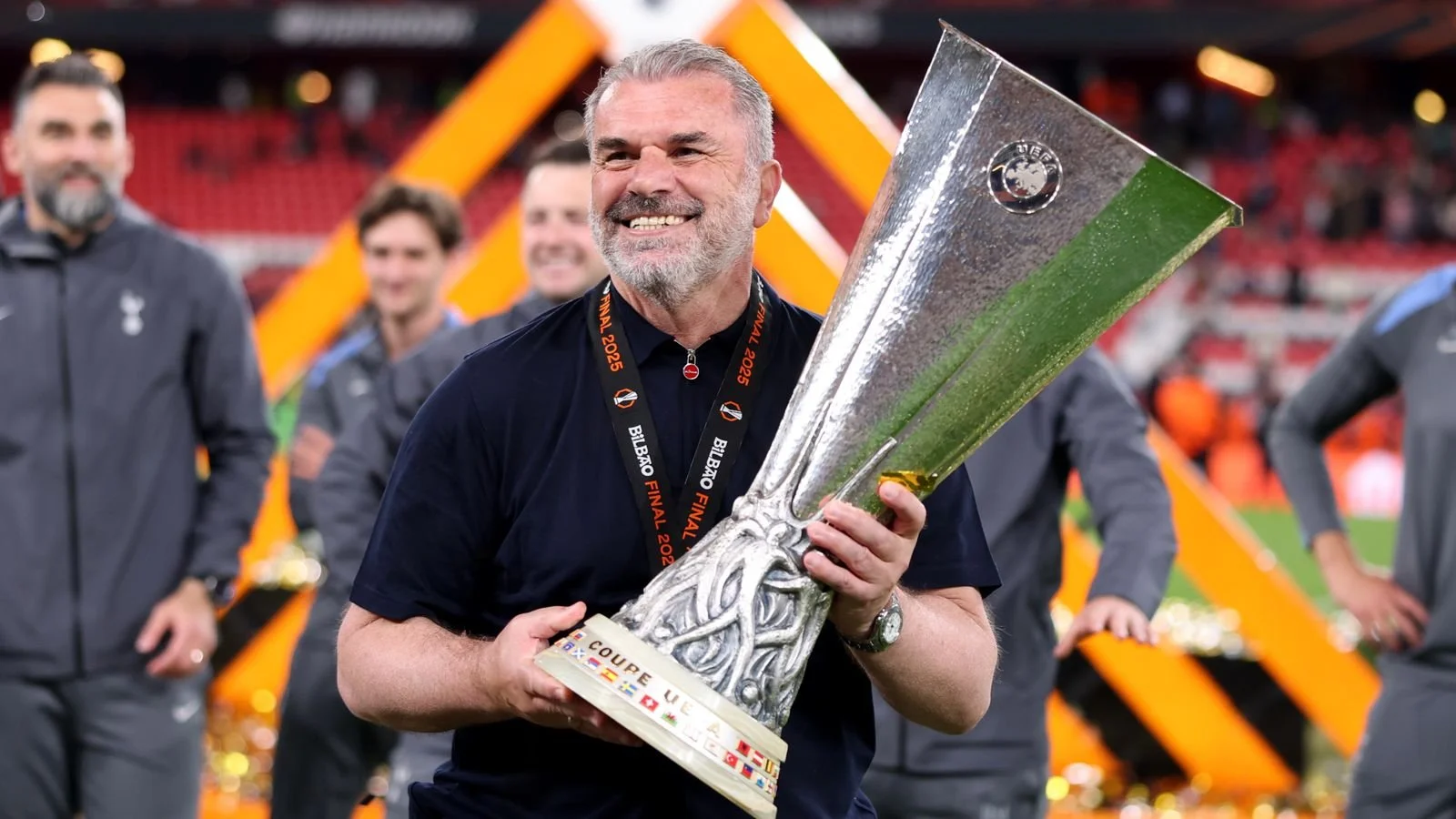
Under Ange Postecoglou, Spurs defeated Manchester United in Bilbao to win the UEFA Europa League. After enduring a season plagued by injury after injury, with victories becoming increasingly rare in domestic competition, Tottenham somehow found a way to achieve European glory.
The celebrations were extraordinary. They continued long into the night in Bilbao before spreading back to North London, where thousands of supporters gathered outside the Tottenham Hotspur Stadium and along Tottenham High Road. Fans travelled from across the country to celebrate a trophy that had felt impossible for much of the campaign.
For many supporters, this was supposed to be the beginning of a new era. The moment that would propel Tottenham back towards the Premier League's elite.
Instead, it proved to be the end of one chapter.
The End of Ange Postecoglou
Despite delivering European silverware, Ange Postecoglou was dismissed shortly afterwards.
The club's reasoning was brutally simple. Tottenham had finished seventeenth in the Premier League, and regardless of European success, the board felt that a club of Tottenham's stature could not accept such domestic failure.
Ange left as a hero to many supporters and secured his place in Tottenham folklore forever through that famous night in Bilbao. Yet the board believed change was necessary.
The appointment of Thomas Frank from Brentford brought renewed optimism. Spurs supporters hoped his pragmatic approach, tactical flexibility, and Premier League experience would stabilise a club that appeared to be drifting.
Unfortunately, the chaos was only just beginning.
The Summer of Transfer Disaster
The summer of 2025 became one of the most frustrating transfer windows in Tottenham's history.
First came the pursuit of Morgan Gibbs White. Reports suggested the deal was close. Fabrizio Romano delivered his famous "Here We Go". Tottenham supporters celebrated what looked like a major coup.
Then everything collapsed.
Nottingham Forest owner Evangelos Marinakis threatened legal action after allegations that Tottenham had approached the player without permission. Spurs withdrew, and Gibbs White ultimately signed a new contract at Nottingham Forest.
It was an embarrassing episode for a club desperately trying to rebuild its reputation.
Then came Eberechi Eze.
Again, Tottenham supporters believed they were about to secure one of the Premier League's most exciting attacking talents. Again, optimism quickly turned to disappointment as Arsenal hijacked the deal.
Two major transfer targets lost. Two public setbacks. Confidence in the club hierarchy began to evaporate.
September Shockwaves
Then came the announcement nobody expected.
Daniel Levy had stepped down as Tottenham chairman.
Social media exploded. WhatsApp groups went into meltdown. Podcasts, articles, and television debates dominated football media for weeks.
For over two decades, Daniel Levy had been the face of Tottenham Hotspur. Love him or hate him, he had shaped the modern identity of the club.
At the same time, Fabio Paratici briefly returned before quickly departing once again, creating even more confusion and uncertainty.
Supporters began asking serious questions.
What exactly was happening behind the scenes at Tottenham Hotspur?
The Thomas Frank Experiment Fails
Thomas Frank's reign began positively enough.
However, by November, performances started to decline. The injury crisis that had haunted Ange Postecoglou returned with a vengeance.
The club attempted to sign Bournemouth's Antoine Semenyo, reportedly offering what would have been one of the most lucrative contracts in Tottenham's history. He rejected Spurs in favour of Manchester City.
Meanwhile, Brennan Johnson was sold to Crystal Palace for £35 million, further reducing attacking options within an already depleted squad.
In response, Tottenham signed Conor Gallagher, bringing energy, intensity, and pressing ability to midfield. Yet many supporters questioned whether this was the profile of player Spurs truly needed. Players such as Ademola Lookman, who later joined Atletico Madrid, appeared better suited to addressing Tottenham's attacking deficiencies.
Technical director Johan Lange publicly stated that the club had faith in the current squad and would not enter the market simply for the sake of making signings.
The problem was that the injuries kept coming.
On 11 February 2026, Thomas Frank was dismissed with a win percentage of just 26 percent, the worst managerial record in Tottenham's history.
Suddenly, this was no longer about European qualification.
This was about survival.
The Relegation Battle Nobody Saw Coming
Igor Tudor arrived on an interim basis on 14 February 2026.
Known for his intensity, discipline, and ability to organise struggling teams, he appeared to be the perfect candidate to lead a survival fight.
The reality was brutal.
One win, one draw, and five defeats left Tottenham deep inside a relegation battle. As West Ham United started collecting points, Spurs supporters began asking an unthinkable question.
Where would Tottenham's next win come from?
The Roberto De Zerbi Gamble
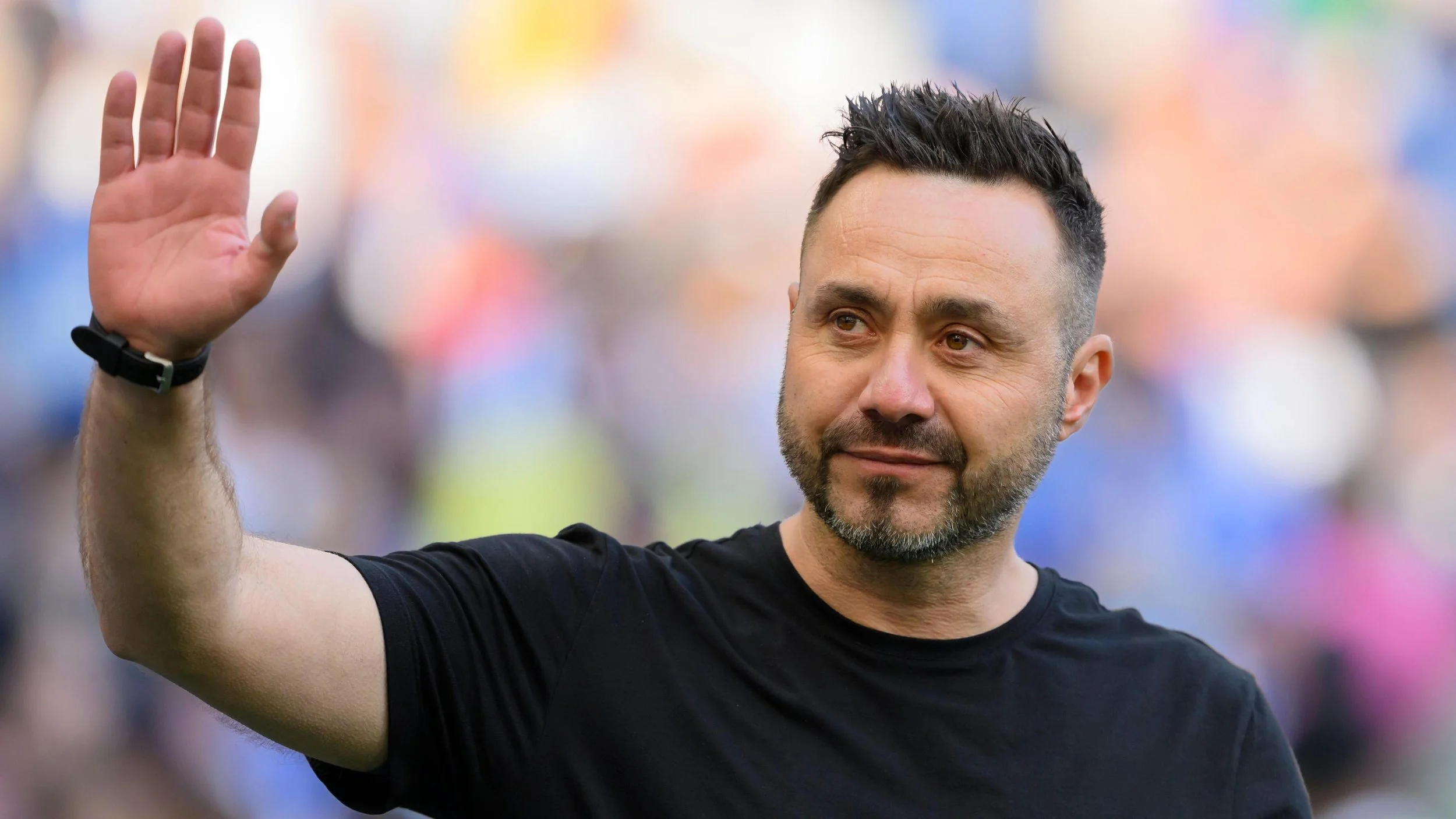
Then Tottenham finally made the appointment many supporters had wanted for years.
Roberto De Zerbi arrived on a five year contract with just seven Premier League matches remaining.
It was a gamble. A huge gamble.
But it worked.
Three wins, two draws, and two defeats proved enough to secure Tottenham's Premier League status while condemning West Ham United to relegation.
The financial consequences of relegation would have been catastrophic.
Tottenham had escaped by the narrowest of margins.
The board responded with an open letter to supporters, acknowledging that back to back seventeenth place finishes were unacceptable and promising significant change.
Many supporters remained sceptical.
After all, they had heard promises before.
Closing One Chapter
At the end of the season, Roberto De Zerbi delivered a message that resonated deeply with supporters.
"We closed one page and we opened another page today, because we have no time. We have to organise the next season, we have to build a stronger team, but I'm very happy and very proud of what every one of us did. It was incredible, I think, but it's finished."
Some supporters viewed those words with optimism.
Others saw them as just another soundbite.
The summer of 2026 would determine who was right.
The Summer That Changed Everything
Before the transfer window officially opened, Tottenham signalled their intentions.
Andy Robertson arrived on a free transfer, bringing leadership, experience, and elite level pedigree.
Marco Senesi followed, arriving after establishing himself as one of Bournemouth's most consistent performers.
Then came the first major statement.
David Ornstein reported Tottenham's interest in Jan Paul van Hecke, and shortly afterwards Spurs completed a £52 million deal with Brighton. Suddenly, Tottenham's defence looked transformed.
Martin Dubravka joined to provide experience and competition as Antonin Kinsky prepared to become the club's new number one goalkeeper.
But Tottenham were only getting started.
The Midfield Revolution
Then came the transfers that changed everything.
First, Tottenham signed Mateus Fernandes from West Ham United for £85 million.
Social media exploded.
Hours later, Spurs did it again.
Sandro Tonali arrived from Newcastle United in a deal worth £92.5 million plus £7.5 million in achievable add ons, making him Tottenham's first ever £100 million player.
In the space of a few weeks, Tottenham had spent £237 million and signed six players.
The message was clear.
This was no longer about survival.
This was about rebuilding Tottenham Hotspur.
Sometimes You Have to Fall Before You Rise
The truth is uncomfortable.
Perhaps Tottenham needed to experience these last eighteen months.
The injuries. The managerial changes. The failed transfers. The boardroom uncertainty. The fear of relegation. The embarrassment of back to back seventeenth place finishes.
Perhaps the UEFA Europa League triumph in Bilbao temporarily disguised deeper structural problems that had been building for years.
For the first time in a long time, however, Tottenham's leadership appears to understand exactly what was at stake.
The summer of 2026 has already delivered one of the most ambitious transfer windows in the club's history, with further links to players such as Savinho, Eli Junior Kroupi, Marcus Rashford, Omar Marmoush, and Crysencio Summerville suggesting the rebuild is far from complete.
Most importantly, there is a growing sense that Roberto De Zerbi has been given something Tottenham managers have often lacked.
Trust.
Trust to rebuild. Trust to reshape the squad. Trust to create a new identity.
No one can guarantee success.
But after eighteen months of chaos, heartbreak, confusion, and fear, Tottenham supporters finally have something they have not felt for a very long time.
Hope.
And sometimes, hope is where every great football story begins.